
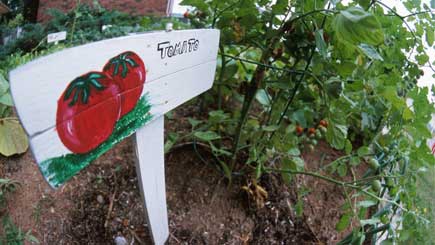
Description: Discover the joys of connecting with God’s creation and one another by starting a community garden. A community garden offers a glimpse into the ways many saints and wisdom figures connected with God, manifests Catholic Social Teaching’s tenet of Care for Creation, and might even lower your blood pressure and help you shed a few pounds! Enjoy the planting, growing, and harvesting as a young adult community. This is a great idea for urban and rural parishes, and we have ideas to make it happen on a small or large scale (from container garden to city block).
Get Ready
- Prep Time: Begin planning a few months in advance. This is especially important if you need to acquire permits for land use. It will take a few days to a few weeks to gather donated tools and buy supplies. Preparing the earth for planting may take a few weeks, depending on the garden’s size, quality of the soil, and the weather. (Note that different variations on a community garden in the “Ideas” section of this program might take significantly less time to prepare.)
- Volunteers Needed: You will want to work with two-three young adults to take the lead on planning the garden. Additionally, the gardeners who sign up for a plot can bring friends and family members to help with labor. You might also enlist confirmation class or high school students who need service hours to help on a Saturday morning.
- Ideal Group Size: Depends on the land size, but your garden could have plots for five-20 people/families.
- Who is this for? Anyone who enjoys working outdoors, has some time to commit regularly to maintaining their garden plot, and places a value on eating a fresh harvest of locally grown food. (Note: While this could be a project exclusively for the young adults in the parish, it could also be something organized and run by young adults that benefits and uses the resources of the entire parish. For example, members who are infirmed or elderly can make phone calls and help organize people and donations of supplies, thereby also earning them a share of produce. Your parish garden can also become an interfaith or ecumenical project by opening garden membership to another local worshiping community, such as a local synagogue, mosque, or Christian church. Your group can decide the parameters.)
- Supplies Needed: Designated space at your parish or in your community for the garden; nutrient rich compost/mulch/topsoil for beds; woodchips or gravel for pathways; garden tools — shovel or any type of tiller for turning over soil before planting, hand trowel and hoe for planting, a metal long-toothed rake for pulling weeds, wheelbarrow for carting anything; stakes, sticks, and string to support tomatoes, beans, squash; plants or seeds to get started; access to, or an easy way to transport, water to your garden, i.e., garden hose, watering can, and/or rain barrel; a weed wacker and clippers for trimming grass. Optional supplies: planks to create raised bed boxes, fencing, materials to mark plot borders (such as used 2” x 4” wood, bricks, or stones).
- Reserve the Space: Ask permission from the pastor and church trustees if there is parish land available. Contact the municipality if you have your eyes on a piece of town/city land for your garden. Either of these locations might be the ideal spot to use raised garden beds. You might also ask a member of the parish who owns a farm if you might use a small corner of their land for your garden. Once land use is approved, you should determine and measure out individual plot sizes and decide on organizational style. For example, gardens can have private family plots meaning one person/family is responsible for the entire year’s labor and therefore can consume their own harvest. Or the entire garden can be communal, open to all for working and all for harvesting. Gardens can have a mix: communal areas for one or two crops and also have family plots. Issues may arise when considering who showed up to work all summer and who showed up just to harvest. (Scripture lessons comes alive!) Follow instructions for plant spacing within plots. Lastly regarding space, gardeners can meet in someone’s home, in a parish meeting space, or in the garden itself for planning, routine meetings, and celebrations.
- Ideal time: Planning out the garden design and rules and seeking land approval should be done over the winter months. Till soil in March/April to plant cool weather crops like kale, lettuce, cabbage, and cilantro. Wait until hotter temperatures to plant tomatoes, peppers, eggplant. Always check the seed/plant packages for the ideal time to plant/harvest in your area.
- Publicize the Program: Spread the word of your community garden plans through e-mail, parish bulletins, flyers, and social media. Depending on how large your garden will be, you might want to reach out to the community with flyers in the supermarket, public library, or the gym. This can be a great outreach to other young adults in your community! It is important to invite input from everyone who you hope will be involved to ensure all voices are heard, gather new ideas and expertise, and pool resources.
Prayer for the Program Planner: Creator God, help me feel your energy as I hold the earth in my hands. Help me to receive the grace of being co-creator with you, nurturing plant life for the nourishment of others as you nurture me through the Eucharist. May our sharing in this garden effort testify to your Eucharistic banquet. Amen.
Community Building: Here are several ideas for building community and sharing the garden harvest with those in need. Your garden can be the theme of a variety of subsequent gatherings:
- Watch the movie The Garden together and talk about your reactions to the film.
- Read the book, Seedfolks or Care for Creation: A Franciscan Spirituality of the Earth by Ilia Delio O.S.F., Keith Douglass Warner O.F.M., and Pamela Wood. Discuss these books together.
- Pray together before and/or after community work hours.
- Invite gardeners to donate part of a week’s harvest to needy parish families or a local food pantry. Meet at Sunday Mass and participate in the Offertory with baskets of veggies.
- Visit shut-ins together with donated produce.
- As a group visit other community gardens for ideas.
- Share meals where garden products are tasted and celebrated.
- Finish the year with a harvest celebration.
Make It Happen
- Set Up:
Land: Your municipality may have an Adopt-a-Lot program, which permits non-profit organizations to use unused property without cost. The length of time is generally at municipality’s discretion. And be sure to read the contract before signing! Our community garden was fined once for letting the grass get too high! (See also the “Reserve the Space” section above for more ideas.)
Water: Ideally look for garden land near a water source. An outside wall spigot is ideal for hose hook-up. Some cities allow tapping into a public water line and installing a water valve. Do your research. Many urban gardens without public water lines use water barrels that gardeners fill with water brought in jugs from home or even get the local fire department to fill them periodically for free. The most ecological way would be to set up your garden next to parish buildings in order to capture rainwater run-off from rooftops. You can hook up a rain barrel to any downspout. Greywater from washing may also be used for watering plants.
Research: Call in your local experts like the local university’s AgSci Extension Program of Master Gardeners or an organizer of another community garden to be a guest speaker and educate your gardeners before they begin the season. Share information for gardeners to read at home on planting techniques, watering tips, insects, composting, etc. Talk together about your expectations for one another regarding working together and following garden rules.
Plants: Talk to your nearest garden store, nursery, botanical garden, children’s garden, or University Ag Program and inquire about plants they might be willing to donate to your community garden. Save seeds after your first year and save plastic plant trays to grow your own seedlings next winter/spring.
- First Meeting: Gather for a potluck meal to kick off the gardening year and go over details about the garden space, water use, share any gardening tips, and create a list of guidelines or garden rules agreed on by everyone. Here’s a sample agreement that you can use to guide you in creating your own. You might also use this time to have volunteers sign-up to contact local businesses, etc., to ask for donations of any seeds, plants, or tools. Also announce your first garden work day and invite all gardeners to participate. After the first meeting, use the guidelines and rules you discussed to draw up an agreement that gardeners sign at the beginning of the season. This helps ensure an understanding of garden structure and provides a standard for how you’ll work together.
- First Work Day: Welcome gardeners and help each get started. Ideally, you should mark the garden plots and even till the soil before the first workday. That way, gardeners can spend time working in their own plot or community plots, build borders for their plots using old 2” x 4” wood, bricks, or stones, or help to line pathways with gravel or woodchips. Provide drinking water and granola bars for a little bit of nourishment, and invite gardeners to bring a bagged lunch for a community garden lunch break.
- Ongoing Gardening: You can schedule other community garden workdays where you’ll all gather at the same time to maintain your garden. Gardeners should also be encouraged to visit and work in their plots as often as they’d like. You can also plan some community activities as outlined in the “Community Building” section of this program.
- Fall Harvest: Plan a celebration of your fall harvest with a potluck meal of foods made from vegetables from your garden. If possible, you might hold this in the garden space itself or at someone’s home. A parish social hall is another option.
- Ongoing Upkeep: Further beautification of the garden can come in small steps over time. Decorative gates, a trellis, birdbath, flower boxes in the entryway, garden statues, flags, etc., are lovely additions that create a peaceful atmosphere.
Ideas
- If you don’t have the space at your parish or in the community for garden plots, start a container garden or indoor herb garden. For example, tomatoes can be planted in large pots by the rectory door for parishioners to help themselves! You can also use the flowerbeds along parish buildings for herbs or tomato plants. You’ll want to follow some of the same guidelines as above — Seek permission, designate volunteers to help gather donations, set times to work on planting and maintaining your container garden, and plan time to celebrate (and taste) your harvest!
- Planting and maintaining a flower garden is another idea. You might use the flowers as decorations around the parish or make arrangements for shut-ins.
- Do you already have a community garden in your neighborhood? Your young adult group might sign up for a plot or two and maintain them as a group. In some neighborhoods, there are community flower garden plots available, too.
- If some of the elderly members of your parish have gardens they’ve let fall to the wayside, your young adult group might volunteer to plant and maintain them for some shares of the harvest. This can be a great inter-generational activity!
Resources: Here are some websites and articles that can help you get started —
- www.communitygarden.org
- Community Garden Checklist
- “Pitching in at a community garden”
- “Extending the Front Porch: Is Your Church ready for a garden?”
- “How Does Your (Community) Garden Grow?” — An article by the author of this program about the transformation of abandoned urban lots into a parish community garden in Camden, New Jersey