
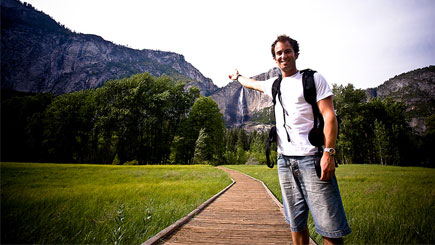
Description: Young adults head to the great outdoors for meaningful reflection in nature on this one-day retreat, which combines individual discernment with paired and group discussion.
Get Ready
- Prep Time: Begin planning one month to six weeks in advance for a nearby day-long retreat. This allows plenty of time for inviting participants and publicity. Planning requires a couple of hours to create the schedule of the day, pick (and reserve, if necessary) a location for the hike, prepare questions and materials, and plan for meals and transportation.
- Volunteers Needed: Volunteers are needed for publicizing and inviting others to attend. It is also helpful to have one or two individuals who are familiar with your hike trail. Optional: Have volunteers prepare a meal for the discerners when they return at the end of the day.
- Ideal Group Size: 10-20 individuals
- Who is this for? Young adults who are discerning vocation/making life decisions. (This program is written for career discernment, but can easily be modified for/or include other life choices.)
- Supplies Needed: Trail/hiking map (for leaders), a sack lunch (and possibly dinner), copies of questions (Recommend: Copies of St. Ignatius of Loyola’s Spiritual Exercises or Daily Examen)
- Publicize the Program: Take a Hike! (For the Rest of Your Life) is a great title.
- Advertise the day for people considering where their careers are headed.
- Personally invite those you know are struggling, unemployed, dissatisfied, or about to go through a transition (grad students, undergrads, second career people).
- Consider advertising where young adults hang out: the gym, coffee shops, bookstores, Laundromats, or campus buildings.
- Ask your pastor or another person who preaches at Mass to mention the program during a homily.
- Use e-mail and social media (Facebook and Twitter) to invite young adults to participate. Post an announcement about this on your parish/organization website, too.
Prayer for Program Planner: Lord, help these people who are looking for you in their lives to be able to discern well where it is that you’d like them to be. Make them persistent listeners for you in their lives so that they may come to know you and to keep themselves mindful of you as they journey through life. Amen.
Community Building: Everyone is troubled by a career path. The program gathers people together and provides them with the “big questions” to discuss individually, collectively, and in pairs throughout a day of hiking. At all meals people gather together to discuss what they have been considering as they walked.
Make It Happen
- Plot out a hiking course at a state park or random hiking trail in your area. Include areas for stopping for meals. The people hiking are going through a career change or looking for a job perhaps for the first time or considering their future career.
- Advertise the day for people considering where their careers are headed. Personally invite those you know are struggling, unemployed, dissatisfied, or about to go through a transition (grad students, undergrads, early retirees, second career people).
- Pray: Gather the group together for a quick prayer before you begin your hike. Offer an opening reflective exercise. Say something like: Today you have no responsibilities. The time away today is for you to spend thinking and praying about your life with God. With this in mind: Consider the following: What if you had the opportunity to do anything? What would you do? Qualify this by stating that you’re not asking young adults to reply with a job or career. You’re asking them to think about how they would spend their time: “I would be more giving to others” is one such possible answer.
- Reflection: Ask young adults to spend some time on the first leg of this journey thinking about this “If you could do anything…” question. They should spend time walking alone on this leg but also spend some time talking with a partner about their thoughts and the partner’s as well, taking turns talking and listening.
- Option: The leader(s) could spend 15 minutes walking with each participant after they have discerned for some time. Giving them one-on-one direction and guidance. One question might lead to another: Why did you choose “to be more giving?” What would that elicit from you? Usually people will say that this would make them feel good — or something along those lines. Are there other times in your life when you might have felt like this? Ask young adults to describe the feeling they would expect to have when they are simply spending their time doing the thing that they have selected. They might even narrow down their choice to a single word where possible. If I could do anything tomorrow I would be: inspiring, giving, an instructor, helpful, hospitable, etc.
- Lunch: Gather together for lunch and over the meal (or afterwards) open the conversation to discuss with one another as much or as little as one would like. Care should be given to keep conversation moving so one person doesn’t dominate. An atmosphere of no judging, advising, or blaming should be established at the outset. We simply want to hear what others are considering.
- Hike Resumes: Ask young adults to imagine how they could possibly be the person that they envision (emphasis on actual images). This isn’t limited to their career or job. For example, inspiring people can find inspiring their co-workers in any line of work to be a powerful image, or parents might wish to inspire their children, husbands their wives, etc. One’s vocation is not limited by one’s career. One’s vocation cannot be avoided. It is who we are. The implication here is that we simply need to do what it is that we already are. Then we can consider whether what we are can be translated into a career or job (our dinner exercise). Again young adults can spend some time talking with a partner or a leader if they are stuck. Time spent alone is paramount.
- Dinner: At the end of your journey you will have dinner as a group. Dinner should be prepared by volunteers ahead of time or you might eat out at a local restaurant or simply cook together outdoors on the grill or pack another sack dinner. (Note: make sure it’s a quiet place — you may consider renting the back room). The discussion that happens here focuses on how each person might wish to live out her/his vocational call. They may be fine working in a local store as a cashier, but that’s because their avocation (hobby or activity outside work) is really the driving force in their lives. Or they might be a successful lawyer and make tons of money, but their real passion is building houses for others. So they do that on the weekend and in their spare time with great abandon.
- Take Home Exercise: Can your passion line up with your career? Ask young adults to write down all the possibilities of their passion-word. For example: One young adult said she’d be an explorer if she could do anything: Her list of possibilities included researcher, travel agent, flight attendant, archeologist, and circus performer. (She ended up as an urban planner.) But don’t limit one’s self to merely a career. What other things can be linked to your passion? Long term, you can invite young adults into a continual process of discernment individually with spiritual directors in the area.
- Supply transportation to the site or suggest car pooling. Be sure to provide clear directions to those who will be driving!
Ideas
- Prepare for or follow up your discernment hike by watching Martin Sheen’s “The Way.”
- Incorporate your discernment walk into a charity walk, gathering sponsors to donate money to a cause.
- You might organize several of these days of reflection exploring different discernment questions. You can plot out these questions over a period of time.
- Do an extended hike over a long period of time. The University at Buffalo is presently dong this with students on spring break walking the Camino in Spain. They raised money from corporations for the trip, and then they asked individuals to sponsor a mile (or kilometer in Spain) of their walk at a set price per mile/km. The money raised in excess of the trip’s cost went to a local cancer center. They modified further by including community service with the local hospital (visiting cancer patients), and the week of walking was centered on “Why we do what we do and what do we hope we’ll do.” For seven days, they hiked 15km/day and then met in the evenings around dinnertime for reflection.
Recommends
- Loving Work: A Spiritual Guide to Finding the Work We Love and Brining Love to the Work we Do by Mike Hayes
- Getting a Life: How to Find Your True Vocation by Renee LaReau
- Strength/personality indicators like Meyers-Briggs, Strengths Finder, Enneagram, etc.
- Copies of the Ignatius of Loyola’s Spiritual Exercises and Daily Examen

